

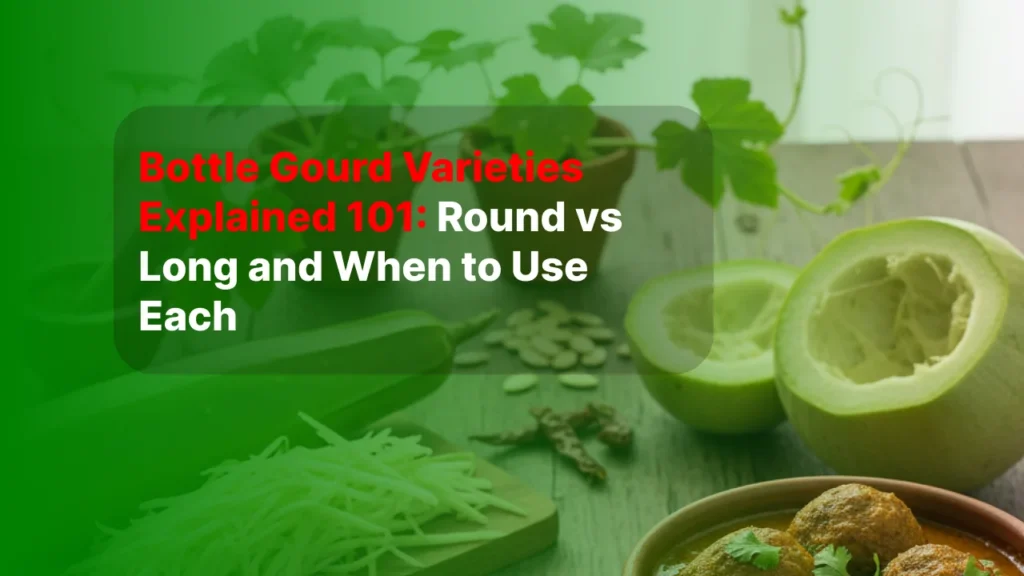
The bottle gourd (Lagenaria siceraria) is a staple in every Desi kitchen. It goes by many names. Lau. Ghiya. Dudhi. Kaddu. Calabash. Regardless of the name, this vegetable is a cooling powerhouse. It is mostly water. It is gentle on the stomach.
Most people walk into a market and grab the first green one they see. This is a missed opportunity. The shape of the gourd actually dictates its texture and best culinary use. Choosing the wrong variety can turn a crisp stir-fry into a mushy mess.
Here is the deep research into the two primary shapes and how to master them in your kitchen.
I. The Long Bottle Gourd (The Classic “Dudhi”)
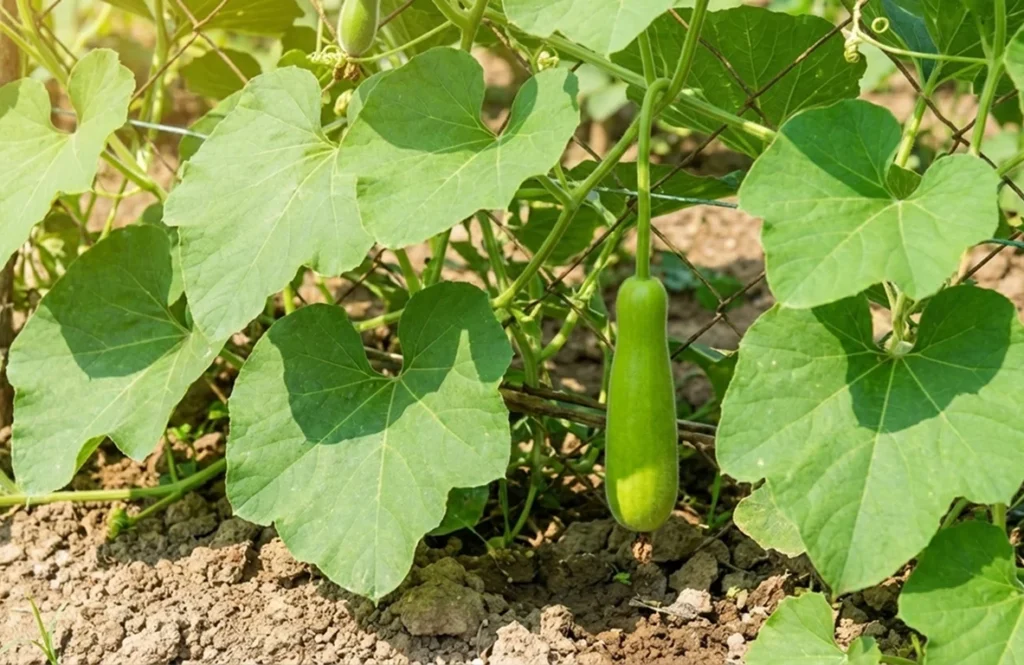
The long, cylindrical bottle gourd is the most recognizable variety. It is often slender. It can grow up to three feet long. However, for cooking, the younger ones are superior.
Texture and Flavor Profile
The long variety typically has a thinner skin. The flesh is uniform. Because of its shape, the seeds are concentrated in a central column. This makes it incredibly easy to prep. You get consistent, even slices every time.
Best Culinary Uses
This variety is the “workhorse” of the kitchen.
- Dudhi Halwa: Because it is easy to grate, the long gourd is the standard choice for desserts. It produces long, elegant strands that hold their shape in milk and sugar.
- Lau Ghonto: In Bengali cuisine, a fine julienne is required. The long gourd provides the straight edges needed for precision cutting.
- Stir-fries: It remains firm when sautéed quickly. It does not release its water content quite as aggressively as the round version.
II. The Round Bottle Gourd (The “Ghia” or Tumri)
The round variety is bulbous. It looks like a green bowling ball or a large pear. In many regions, this is considered the “heirloom” or traditional shape found in village gardens.
Texture and Flavor Profile
Round gourds often have a slightly higher water content. The flesh is exceptionally tender. It feels “creamy” once cooked. The seed cavity is wider and more dispersed.
Best Culinary Uses
The round gourd is the king of slow-cooked dishes.
- Koftas: The softer flesh makes it easier to mash and bind with gram flour (besan).
- Stuffed Gourd: You can hollow out a round gourd. It acts as a natural bowl. You can fill it with spiced lentils or minced meat.
- Soups and Stews: It melts into the broth. If you want a thick, luscious gravy, use the round variety.
III. Law Pani Shak: The Forgotten Superfood
We often focus on the fruit. We forget the vines. In Bengal and parts of Southeast Asia, the leaves and tender stems are prized. This is known as Law Pani Shak.
Why it Matters
The leaves are rich in chlorophyll and fiber. They have a distinct, earthy sweetness. If you are growing your own gourds using organic gourd seeds, you have access to this delicacy. You cannot find fresh, high-quality leaves in most commercial supermarkets.
How to Cook It
The stems are hollow and crunchy. The leaves are velvety.
- Steamed with Mustard: Steam the leaves with a paste of mustard seeds and green chilies.
- Mixed Vegetable Labra: Add the chopped stems to a mixed vegetable medley for a boost of texture.
IV. Choosing Bottle Gourd Seeds
Choose seeds based on the variety you want to grow, the supplier information, packet details and growing requirements. If a seed is described as organic, open-pollinated or hybrid, check the product or supplier documentation for that specific claim.
The Organic Advantage
Using organic gourd seeds ensures the plant maintains its traditional genetic profile.
- Thinner Skin: Organic varieties usually have a more delicate rind. This means less waste during peeling.
- Increased Satiety: Heirloom seeds often produce fruit with a denser nutrient profile.
- Seed Saving: If you use organic, open-pollinated seeds, you can save the seeds from your best gourd. You can plant them again next year.
V. Functional Comparison: A Quick Reference
| Feature | Long Variety (Dudhi) | Round Variety (Ghia) |
| Prep Time | Fast (Easy to peel/grate) | Moderate (Wider surface area) |
| Water Content | High | Very High |
| Primary Dish | Halwa, Stir-fry, Juicing | Kofta, Mashed curries, Stuffing |
| Seed Texture | Concentrated core | Dispersed/Softer |
| Storage Life | Longer (Tighter skin) | Shorter (Bruises easily) |
Ready to Grow Bottle Gourd at Home?
Once you know which variety fits your cooking and garden, the next step is choosing your seeds.
Browse South Asian bottle-gourd and related vegetable seeds available from DesiSlice.
VI. The “Bitter” Warning: A Safety Essential
There is a chemical compound called cucurbitacin. It is found in the calabash family. This compound is toxic in high doses. It makes the gourd taste extremely bitter.
The Rule of Thumb
Always taste a tiny piece of the raw gourd before cooking. If it is bitter, throw it away. Do not cook it. Do not juice it. Heat does not destroy the toxin. This is rare in gourds grown from quality bottle gourd seeds, but it can happen due to cross-pollination or plant stress.
VII. Harvesting and Storage Secrets
To keep your bottle gourd fresh, you must handle it with care. It is a sensitive vegetable.
When to Pick
If you are growing your own, do not wait for the gourd to get huge. Large gourds are pithy. They have hard seeds. Pick them when the skin is still bright green and slightly fuzzy. The “fingernail test” is best. If your nail easily pierces the skin, it is perfect.
How to Store
Keep the gourd whole until you are ready to use it. Once cut, it oxidizes. The flesh turns brown. Wrap the cut end tightly in parchment or cloth. Store it in the coolest part of your refrigerator.
VIII. Final Culinary Advice
The bottle gourd is a blank canvas. It absorbs the flavors of the spices you provide.
For the Long Gourd, use light spices. Think cumin seeds and green chilies. You want to highlight the crunch.
For the Round Gourd, use bolder flavors. Ginger, garlic, and turmeric work well. Let the gourd soften into a rich, comforting mash.
Whether you are seeking the perfect calabash gourd for a summer stew or looking to grow law pani shak in your backyard, the variety matters. Choose wisely. Your palate will notice the difference.





Comments ( 0 )