

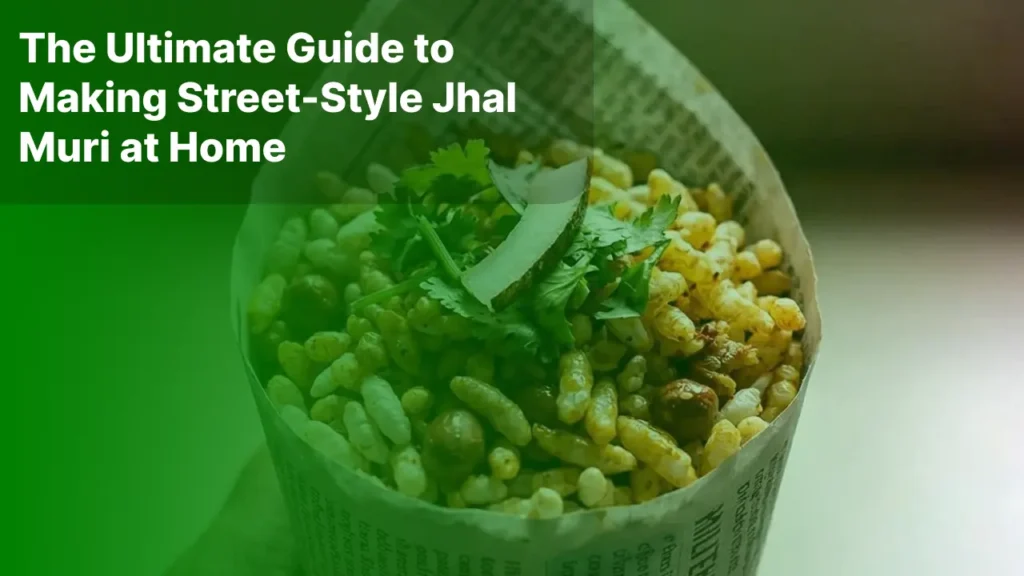
Kolkata-style Jhal Muri served in a traditional paper cone called a “thonga.”
Picture this: you are walking past a busy train station in Kolkata, West Bengal, and the smell of something spicy and tangy hits you like a friendly punch in the nose. You follow your nose to a man with a big metal bowl, mixing puffed rice faster than you can blink, and then, boom, he hands you a paper cone full of the most exciting snack you have ever tasted. That snack? Jhal Muri.
If you live in the USA and you grew up eating South Asian food, or even if you just love bold, spicy flavors, this guide is for you. Today we are going to show you exactly how to make authentic Bengali spicy puffed rice (Jhal Muri) at home, step by step, with easy-to-find ingredients.
No cooking required. Ready in 10 minutes. Absolutely delicious.
What Is Jhal Muri? A Quick History Lesson
Before we get to the recipe, let us talk about what Jhal Muri actually is, because this snack has a story worth knowing.
The Bengali name “Jhal Muri” translates simply: “Jhal” means spicy, and “Muri” means puffed rice. So at its most basic, Jhal Muri is spicy puffed rice, but calling it “just spicy puffed rice” is like calling the ocean “just water.” There is so much more going on.
This street food snack was sold by Bihari migrants on the streets of Kolkata during World War II to the soldiers. From that humble origin, it grew into one of the most loved street foods across West Bengal, Bangladesh, Odisha, and Bihar.
Jhal Muri sellers set up their shops outside schools, colleges, railway stations, and parks, anywhere that people need a light, affordable evening snack. The classic image of Jhal Muri is always tied to a railway journey. Some of the most loved versions are served on trains, by travelling vendors who board with their Jhal Muri setup, make it fresh for hungry passengers, and then get off at another station.
Today, you can make this exact snack in your own American kitchen, using ingredients from your nearest South Asian grocery store or right from the DesiSlice South Asian Groceries section.
Why Americans Are Falling in Love with Jhal Muri
Jhal Muri is not just a foreign snack. It fits perfectly into the American love of bold, complex flavors. Think of it like this: if potato chips are a calm lake, Jhal Muri is a river with rapids. Every single bite gives you something different, crunch, spice, tang, a little heat, a little earthiness — all at the same time.
Here is why it works so well as a healthy South Asian tea time snack for busy Americans:
- It takes less than 10 minutes to put together
- It uses mostly raw, fresh vegetables
- It is naturally vegan and gluten-friendly (when you skip the sev)
- It is low in calories but high in flavor
- It is a great conversation starter at parties
It pairs beautifully with a hot cup of chai, just like it does on the streets of Kolkata. Browse the Tea & Beverages collection at DesiSlice if you want to complete the full street-food experience at home.
The Complete Jhal Muri Ingredient List
This is where the magic starts. Let us go through every ingredient and why it matters.
The Base
Puffed Rice (Muri / Murmura / Kurmura)- 4 cups
This is the foundation. Puffed rice is also known by various names: muri, marmara, pori, kurmura, or murmura, depending on the region. For the best Jhal Muri, you want puffed rice that is very crispy and dry, not soft or stale. Think of puffed rice as the canvas everything else is the paint.
Pro tip: If your puffed rice feels a little soft, dry roast it in a pan on low heat for 3 to 5 minutes, or microwave it for 60 to 90 seconds. It will puff right back up.
The Vegetables
- Onion (1 small, finely chopped)– adds a sharp, raw bite
- Tomato (1 small, finely chopped)– adds juicy tang
- Cucumber (1/4 cup, finely diced)– gives freshness and crunch
- Boiled potato (1 small, cut into small cubes)– adds body and makes it more filling
- Green chilies (1 to 2, finely sliced)– where the heat comes from
- Fresh coriander / cilantro (2 tablespoons, chopped)– adds a herby freshness
Note: If you have kids eating, simply skip the green chilies or reduce the amount.
The Crunch
- Chanachur or Sev (1/2 cup): Chanachur is a Bengali-style farsan or crunchy mixture. You can use any crunchies you have on hand, including bhujiya sev. This adds a second layer of crunch that makes each bite feel like a little party.
- Roasted peanuts (3 tablespoons): Dry-roast these in a pan, remove the skins, and set aside. They add a nutty depth.
- Fresh coconut (2 tablespoons, finely chopped or grated): optional but highly recommended for authenticity
The Spices
- Chaat masala (1/2 teaspoon): the tangy, slightly salty spice blend that ties everything together
- Cumin powder, roasted (1/4 teaspoon)
- Red chili powder (1/4 to 1/2 teaspoon, depending on your heat preference)
- Black salt / Kala Namak (a pinch to taste): this adds a sulfury, mineral flavor that is uniquely South Asian
- Regular salt (to taste)
The Liquids (The Real Secret Weapons)
- Raw mustard oil (1 to 2 tablespoons): This is the soul of Jhal Muri. More on this below.
- Fresh lemon or lime juice (from half a lemon): adds brightness and tang
- Tamarind pulp (1 tablespoon, optional): adds a deeper sourness that complements the lemon
Raw mustard oil is the ingredient that separates real Jhal Muri from everything else.
Why Mustard Oil Is the Star of This Dish
If you remove mustard oil from Jhal Muri, it is no longer Jhal Muri. It becomes something else entirely.
Mustard oil is a must-have ingredient for Bengali Jhal Muri. It adds a pungent flavor to the dish, making it unique and different from cousins like bhel puri, masala madakki, girmit, or churmuri.
What makes Jhal Muri stand out is the use of mustard oil, which adds a sharp, pungent flavor that is typical of Bengali-style street food. This pungency takes the simple snack to a whole new level.
Think of mustard oil like the bass guitar in a band. You might not always notice it consciously, but when it is missing, something feels deeply wrong.
Where to find mustard oil in the USA: Look in the cooking oils section of any South Asian grocery store, or browse the DesiSlice Shop for South Asian pantry staples. Always use raw (unheated) mustard oil for Jhal Muri, do not cook it. Just drizzle it in at the end.
One important note for readers: In the USA, mustard oil sold in stores is often labeled “for external use only” due to FDA regulations around erucic acid content. Many South Asian families use it for cooking regardless, following generational food traditions. You can also look for “kachi ghani” (cold-pressed) mustard oil. Make the choice that feels right for your household.
Step-by-Step: How to Make Street-Style Jhal Muri at Home
This is the part you have been waiting for. Follow these steps and you will have a bowl of authentic, spicy puffed rice salad in under 15 minutes.
Step 1: Prepare Your Ingredients
Chop all your vegetables before anything else. Dice your onion, tomato, cucumber, and boiled potato into very small, uniform pieces. Finely slice your green chilies. Chop your cilantro. Have everything ready in small bowls, like a cooking show set up.
Why? Because once you start mixing, the puffed rice will go soggy fast. Speed is everything.
Step 2: Roast and Prep the Puffed Rice
Make sure your puffed rice is dry and crispy. If it is not, dry roast it in a pan on low heat for 3 to 5 minutes, stirring constantly. Let it cool completely before using.
Step 3: Mix the Dry Ingredients First
In a large mixing bowl, add your puffed rice. Add the dry or drier ingredients first so that the muri does not turn soggy. So add your roasted peanuts, chanachur or sev, and chopped coconut now.
Step 4: Add the Spices
Sprinkle in your chaat masala, cumin powder, red chili powder, black salt, and regular salt. Toss gently to coat the puffed rice.
Step 5: Add the Vegetables
Now add your chopped onion, tomato, cucumber, boiled potato, green chilies, and cilantro. Give everything a good toss.
Step 6: Add the Liquids, Fast
Drizzle your mustard oil, then squeeze in lemon juice. Mix quickly and serve immediately. If you are using tamarind pulp, add it along with the lemon juice.
Do not wait. Once the liquids go in, the clock is ticking. Serve and consume immediately, as mustard oil, lemon juice, and tomatoes make the puffed rice soggy quickly.
Step 7: Serve in a Paper Cone (Optional but Fun)
If you make it at home, serve it in the traditional thonga or paper cone, which gives a feel of the authentic Kolkata snack. Simply roll a piece of parchment paper or newspaper into a cone shape, fold the bottom, and pour your Jhal Muri in. It changes the whole experience.
Fresh, colorful, and incredibly crunchy, homemade Jhal Muri at its best.
Tips for Bengali Street Food Beginners
Making Jhal Muri for the first time? Here are some beginner-friendly tips:
Keep everything pre-measured. This is not a recipe where you can stop and chop mid-way. Prepare all ingredients before you touch the puffed rice.
Control your heat. Start with one green chili if you are not used to spicy food. You can always add more next time. Jhal Muri should make your mouth tingle, not burn.
Taste as you go. Add your spices in small amounts and keep tasting. The balance of salty, sour, spicy, and pungent is what makes this snack great.
Do not skip the lemon. The lemon juice is what brightens the whole thing up. Without it, the flavors feel flat.
Fresh over canned, always. Use fresh tomatoes, fresh cucumbers, and fresh lemon. This snack depends on the freshness of its ingredients.
Keep your coconut handy. Coconut is said to always be added for an authentic taste. It adds a mild sweetness that balances the spice beautifully.
Ingredient Swaps and Variations
One of the best things about Jhal Muri is that it is very flexible. Here are some swaps for when you can not find every ingredient:
| Original | Swap |
| Chanachur | Bombay mix, bhujiya sev, or any Indian savory mix |
| Fresh coconut | Toasted coconut flakes (unsweetened) |
| Green mango pickle oil (aam tel) | A few drops of tamarind chutney |
| Boiled yellow peas | Canned chickpeas, drained and rinsed |
| Black salt | Regular sea salt (flavor will be a little less complex) |
Some versions also use sprouted black chickpeas (kala chana), boiled white peas, and fresh chopped coconut. There is no single “correct” version, every street vendor has their own touch.
Is Jhal Muri Actually Healthy?
Yes, and here is why it works as a healthy South Asian tea-time snack:
- Puffed rice is low in calories and fat
- Fresh vegetables like cucumber, tomato, and onion add vitamins, minerals, and fiber
- Lemon juice gives you a dose of Vitamin C
- Mustard oil (in small amounts) contains Omega-3 fatty acids and has anti-inflammatory properties according to traditional Ayurvedic wisdom
- Roasted peanuts provide protein and healthy fats
- No cooking = no added fats from frying
Compare this to a bag of chips or a candy bar, and Jhal Muri wins every single time for nutrition. It is the kind of snack that fills you up just enough without making you feel heavy.
How to Pair Jhal Muri for the Full Street-Food Experience
In Kolkata, Jhal Muri is almost always eaten with a cup of hot, milky chai. That combination of spicy-tangy puffed rice with sweet-spiced tea is something special — the tea cools the heat, and the Jhal Muri wakes your taste buds right back up.
Explore DesiSlice’s Tea & Beverages collection to find the perfect chai to go with your Jhal Muri. You can also check out the full range of South Asian snacks and pantry items to stock your kitchen for more recipes like this.
If you love Bengali food and want to explore more, read our post on 7 Bengali Leafy Greens That Will Transform Your Health and Kitchen, another great piece on how rich and diverse Bengali cooking really is.
Final Thoughts: Bring the Street to Your Kitchen
Making authentic Bengali spicy puffed rice at home is one of the easiest and most rewarding things you can do as a South Asian food lover in the USA. It does not need a stove, a fancy pan, or hours of work. It just needs good ingredients, a little boldness with your spices, and the willingness to serve it fast.
The first time you take a bite of homemade Jhal Muri and feel that mustard oil hit sharp, pungent, alive, you will understand why millions of people in Kolkata, Dhaka, and across South Asia have been obsessed with this snack for generations.
So go ahead. Get your puffed rice. Find your mustard oil. Chop your vegetables. And make some street magic in your own kitchen.
For all the South Asian pantry staples you need to make this recipe, head over to the DesiSlice Shop, your one-stop destination for authentic South Asian groceries delivered right to your door in the USA.
Love this recipe? Share it with a friend who needs more spice in their life. And let us know in the comments how do you like your Jhal Muri: extra spicy, extra tangy, or somewhere in between?
Frequently Asked Questions
Can I make Jhal Muri ahead of time?
Not really. Jhal Muri loses its crunch when kept for longer. Make it just before serving. However, you can keep all the components ready to save time. Chop your veggies and measure your spices hours in advance, then mix everything together right before eating.
Where can I find Chanachur in the USA?
Any South Asian grocery store will carry it. You can also find it under the name “Bombay mix” or “Indian snack mix.” Check the DesiSlice Snacks section for available options.
Is Jhal Muri gluten-free?
All ingredients except the sev mix are gluten-free. You can either skip it or use a gluten-free mix.
What makes Bengali Jhal Muri different from Bhel Puri?
Great question. Both use puffed rice as a base, but what makes Jhal Muri stand out from Bhel Puri is the use of mustard oil, which adds a sharp, pungent flavor typical of Bengali-style street food. Bhel Puri uses chutneys as its main flavoring agent. Jhal Muri is sharper, more pungent, and simpler in its construction.
Can kids eat Jhal Muri?
Absolutely! Just skip the green chilies and reduce the red chili powder. The rest of the flavors are mild and very enjoyable for children.






Comments ( 0 )