

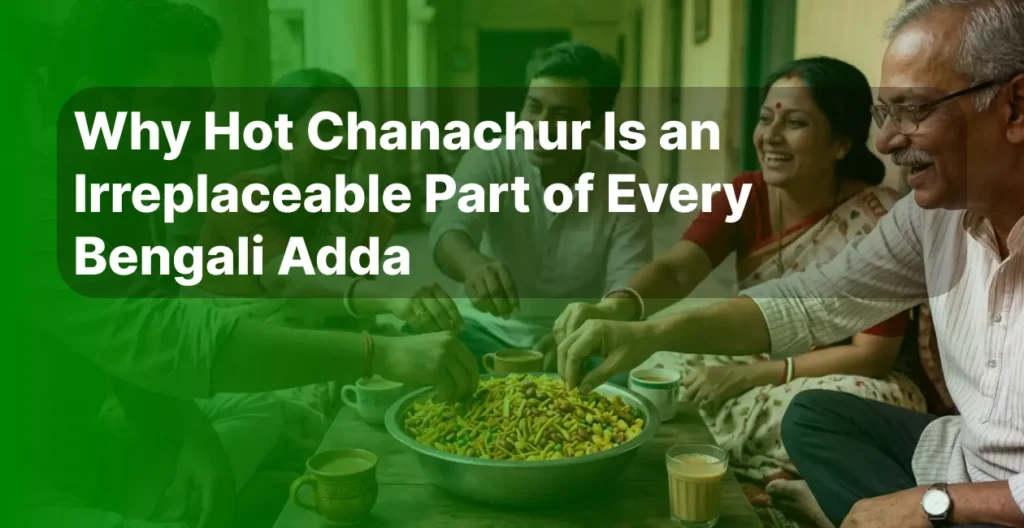
There is a Bengali word that has no real translation in English. Dictionaries try to call it a “hangout” or an “informal gathering,” but both of those descriptions miss the point by a mile. The word is Adda.
Adda is what happens when three, four, or ten Bengalis sit down together over earthen cups of tea, over a shared bowl of something crunchy and spicy, and begin talking. About everything. The state of the country. A movie they watched last week. A cricket match. A neighbor’s wedding. The meaning of life. The price of fish. And then back to the country again.
It is a conversation as a way of living. And for as long as Bengali Adda has existed, which is at least two centuries, there has been a bowl of Chanachur sitting somewhere in the middle of the table.
This blog is about that relationship. About what Chanachur actually is, why the hot and spicy version holds a special place in every Bengali gathering, and how you can bring this same warmth and crunch into your home right here in the USA.
What Is Bengali Adda? A Culture That Cannot Be Translated
To understand why Chanachur matters, you first have to understand what Adda actually means to a Bengali person.
Adda is a sort of self-declared or self-claimed discourse of Bengali social life, a cherished tradition they call adda, distinctly egalitarian and spontaneous, with a flavor all its own. It is not a formal meeting. There is no agenda, no schedule, no host or guest of honor. Adda happens when it happens. A cup of tea appears, someone pulls up a chair, and suddenly an hour has passed.
From the bustling coffee houses of Kolkata to the humble tea stalls in rural Bengal, Adda sessions are where bonds are strengthened, ideas are debated, and creativity flourishes.
Historically, Adda played a far bigger role in Bengali life than just social bonding. Adda is a kind of informal social talk in Bengali, among friends and colleagues, but its content is always of intellectual significance, addressing issues such as local and global politics, art, literature, and music. The Bengal Renaissance of the 19th century, a cultural explosion that shaped modern Indian intellectual life, was fueled partly by the Addas that took place in drawing rooms, university corridors, and the famous coffee houses of College Street in Kolkata.
Over time, on the roads adjacent to the university, several bookstores sprouted, along with tea stalls, snack shops, and eateries, where students would sit and talk endlessly over tea, telbhajas, and puffed rice. Anything that did not require a lot of fuss or cutlery was good enough for an impromptu Adda menu.
And right at the center of that “no fuss, no cutlery” snack menu, always was Chanachur.
What Is Chanachur? The Snack That Built Its Own Legend
Chanachur is the Bengali name for what the rest of the world calls Bombay Mix or Namkeen. But calling Bengali Chanachur just another Bombay Mix is like calling a sitar just another stringed instrument. Technically correct, completely missing the soul.
The Bengali version of Chanachur incorporates mustard oil and a hint of sweetness, reflecting the region’s culinary traditions. This is what sets it apart. While Namkeen from northern India is bold and straightforward in its spicing, and Bombay Mix from Maharashtra leans on tamarind and sweetness, Bengali Hot Chanachur has a layered character. The sharpness of its spices hits first, then a deep savory warmth from the mustard oil settles in, and finally, there is that faint tingle at the back of the throat that tells you the chili is still working.
In Bengal, Chanachur is not just a snack. It is a flavourful adventure through the traditions and tastes of Bengal. Whether one is savouring the spiciness of Jhal, the tanginess of Tok, or the harmonious blend of Tok Jhaal Mishti, each bite is a celebration of heritage and passion.
The history of Chanachur in Kolkata is fascinating. Around 1928 to 1929, Himmatbhai Patel, upon reaching Kolkata, started selling chanachur and bhujia in a handcart opposite Ujjala Movie Hall. Business was slow until 1950, when a blockbuster movie starring Uttam Kumar and Suchitra Sen was released in Ujjala named Agnipariksha, and with the help of the movie theatre, this small Chanachur shop got the required boost. That is the kind of story that only a city like Kolkata can produce, a snack vendor saved by a classic film.
What Goes Into Hot Chanachur? Understanding the Ingredients
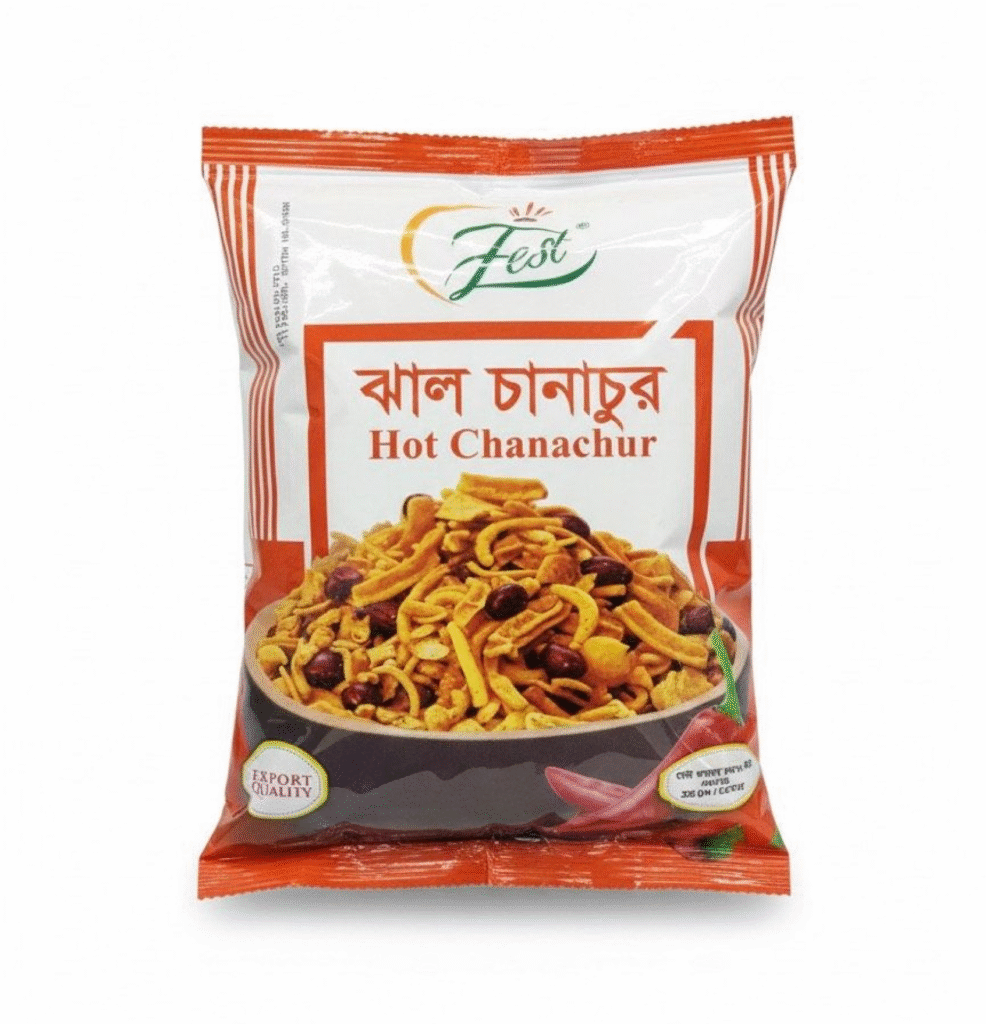
The Fest Hot Chanachur (Spicy Snack Mix) available on DesiSlice is a real, Export Quality blend that brings together the classic components of authentic Bengali Chanachur:
Crisp Sev (Chickpea Noodle Strands) These thin, fried noodles made from chickpea flour are the backbone of any Chanachur. They provide the primary crunch and carry the spice coating beautifully. Gram flour noodles, deep fried until completely crispy, create the signature crunchy texture of the snack.
Crunchy Fried Lentils and Peas (Dal) Moong dal, chana dal, and split peas are fried separately until they develop a nutty, golden crunch. These little bites are what give Chanachur its substance and depth — without them, it would just be spiced noodles.
Peanuts Roasted peanuts are the protein anchor of the mix. They hold their own texture even when surrounded by lighter ingredients, giving you something satisfying to bite into among all the crunch.
Flavored Puffed Rice A small amount of spiced puffed rice adds lightness and contrast, ensuring the mix does not become too heavy or oily.
Assorted Spices This is where Bengali Chanachur truly becomes itself. Red chili powder, turmeric, cumin, coriander, black pepper, aniseed, and sometimes a touch of cinnamon or clove combine into a spice blend that is hot, complex, and deeply aromatic.
The “Export Quality” label on Fest Hot Chanachur is not just a marketing phrase. It means the product has been made to meet the standards required for international markets, consistent flavor, proper packaging for freshness, and no compromise on the ingredients that make it taste the way it should.
At $6.99 (reduced from $8.00, a 13% saving), it is one of the most affordable authentic South Asian snacks available online in the USA. Order it directly from the Fest Hot Chanachur product page on DesiSlice.
Why “Hot” Chanachur? The Case for Spice at Every Adda
Bengali Chanachur comes in several varieties, sweet-and-sour, mild, and the one we are focused on today: Hot. And if you have ever sat in a real Bengali Adda, you already know why the hot version always wins.
The reason is simple. Spice does something to a conversation that mild food never can. It wakes you up. It makes you reach for your tea more often, which means you sip more slowly, which means you stay longer. The heat from the chili creates a gentle, shared discomfort that nobody wants to admit, instead, everyone grins and reaches for another handful.
Think of a campfire. The warmth and the slight discomfort keep people gathered around it far longer than a lamp would. Hot Chanachur is the campfire of the snack world. It keeps the Adda going.
There is also a flavor science angle here. Capsaicin, the compound that makes chili hot, triggers the release of endorphins, the body’s natural feel-good chemicals. So a genuinely spicy snack like Hot Chanachur actually makes people feel better while they are eating it. More relaxed. More open to talking. More willing to stay for another cup of chai.
No wonder Bengalis have been pairing it with Adda for centuries.
Hot Chanachur vs. Indian Namkeen: What Makes Bengal’s Version Different
A lot of Americans who love Indian food are familiar with Namkeen, the broad category of spiced, crunchy snack mixes sold at South Asian grocery stores and sometimes even at mainstream supermarkets. So what makes Bengali Hot Chanachur different enough to deserve its own blog post?
Here is a clear breakdown:
| Feature | Hot Chanachur (Bengali) | General Indian Namkeen |
|---|---|---|
| Spice level | Bold, direct chili heat | Varies widely, often milder |
| Mustard oil | Traditional, adds pungency | Rarely used |
| Sweetness | Slight, or none in hot variety | Often more prominent |
| Sev texture | Thin, crispy strands | Can be thicker, breadier |
| Regional character | Distinct Bengali flavor profile | More pan-Indian |
| Adda culture | Inseparable from the tradition | No specific cultural tie |
The mustard oil is the true differentiator. A hot and spicy mix of crunchy peanuts, gram flour sev strings, and roasted chana dal, generously spiced with turmeric, chili powder, pepper, garlic, cumin seeds, and other spices, great with cold drinks and hot chai. But it is the mustard oil undertone in authentic Bengali Chanachur that adds that pungency, the same sharpness that defines so much of Bengali cooking, from Jhal Muri to fish curry to mustard-crusted greens.
If you enjoy regular Namkeen but have never tried Bengali Hot Chanachur, think of it as upgrading from a standard coffee to an espresso. Same category. Completely different experience.
How Chanachur Lives at the Center of Bengali Social Life
Ghoti Gorom is essentially street food, but it is much more than that. It is salted chanachur mixed with onions, green chillies, coriander leaves, lemon juice, and the star of the show, amra, a very sour and tangy fruit, which is what gives Ghoti Gorom its special character. Street hawkers carry their wares in cylindrical containers tied securely with gamchha, covered with a red cotton cloth, treading through Calcutta’s streets and by lanes, selling their savoury snack.
That image of the Ghoti Gorom vendor moving through Kolkata’s lanes is one of the most iconic pictures in Bengali street food culture. It is not just a vendor selling a snack. It is a mobile Adda activator. Wherever the vendor stops, people gather. The snack gets made fresh, tossed, and served in a small paper packet, and before you know it, four or five people are standing on a street corner having an Adda that nobody planned.
This is the magic of Chanachur in Bengali life. It does not need a formal setting. It does not need a table or chairs. It creates community wherever it appears.
For South Asians in the USA, this is exactly the gap that a bag of authentic Hot Chanachur can fill. You are not just buying a snack. You are buying the possibility of that moment, friends gathered around, tea brewing, conversations wandering wherever they want to go, hands reaching into the same bowl.
Six Ways to Enjoy Hot Chanachur Beyond Just Eating It Straight
Yes, eating Hot Chanachur straight from the bag is already excellent. But here are six more ways to bring it into your kitchen and social life:
1. The Classic Adda Bowl Pour it into a large, shallow bowl. Set it in the middle of your table. Make sure there is hot chai nearby. Do not plan a conversation. Just let one start.
2. Chanachur Topping for Jhal Muri Hot Chanachur is one of the essential toppings for Jhal Muri, the famous Bengali spicy puffed rice dish. The crunch and spice of Chanachur layered over Muri, mustard oil, and fresh vegetables is one of the greatest flavor combinations in South Asian street food. Read our full guide on How to Make Street-Style Jhal Muri at Home for the complete recipe.
3. Spicy Raita Topping A plain yogurt raita (yogurt with cucumber and cumin) topped with a spoonful of Hot Chanachur right before serving is a revelation. The crunch against the cold, smooth yogurt is a texture contrast that works better than it has any right to.
4. Lemon-Tossed Chanachur Squeeze half a lemon over a bowl of Hot Chanachur and toss quickly. Add a few drops of raw onion juice if you have it. This is the quickest, most electric way to eat it, the citrus brightens every spice note in the mix.
5. Party Appetizer Mix Combine Hot Chanachur with roasted cashews, dried mango slices, and a sprinkle of chaat masala to create a party snack mix that nobody will have tasted before. It disappears from the bowl faster than anything else on the table.
6. Soup Topping A spoonful of Hot Chanachur added to a bowl of hot dal (lentil soup) or tomato soup right before eating adds crunch, heat, and dimension. Think of it as the South Asian crouton, but far more interesting.
Bringing Bengali Adda to Your American Home
For South Asians living in the USA, Adda does not require a specific city or a famous coffee house. It only requires people, tea, and something good to eat in the middle of the table. Hot Chanachur is the simplest way to create that sensory anchor, that smell of spiced, fried lentils and peanuts that signals to everyone in the room that this is a moment for staying, for talking, for not rushing anywhere.
Here is how to set up your own Adda at home:
- Brew a strong pot of chai. The Tea & Beverages section on DesiSlice has authentic South Asian tea options that pair perfectly.
- Pour out a generous bowl of Fest Hot Chanachur.
- Add a squeeze of lemon and a handful of thinly sliced red onion if you want the full Ghoti Gorom treatment.
- Invite the kind of friends who do not mind staying for three hours when they said they would only come for one.
- Leave the phones face down.
That is an Adda. That is the whole recipe.
Other Spicy Snacks to Complete Your Adda Spread
If you are building a full Bengali-style tea-time snack spread for a gathering, Hot Chanachur is the anchor, but it does not have to be the only item on the table. DesiSlice has a full range of South Asian snacks to round out your Adda table:
- Fried Peas (Muttor Bhaja): crunchy, savory, and a classic alongside Chanachur
- Spicy Tomato Potato Crackers by Bombay Sweets: a great lighter option for those who prefer less heat
- Grand Choice Salted Biscuits: the quieter, more refined companion for guests who want something with their chai that is not too bold
- Pooja Nuts Thin Lachhi: a traditional savory snack that rounds out any spread beautifully
Browse the full Snacks section on DesiSlice to build your perfect Adda table. Free shipping is available on orders over $49, making it easy to stock up and be ready for whenever the next Adda decides to happen.
Final Thoughts: The Bowl That Holds the Adda Together
Every culture has its gathering food. The Italian table has its antipasto. The Spanish have their tapas. The Americans have chips and dip. And the Bengalis have Chanachur.
But what makes Chanachur different from all of these is not the recipe, it is the tradition it carries with it. Centuries of conversation. Generations of friendships that started over a shared bowl. Ideas that grew into books, into movements, into revolutions, all sparked somewhere between one handful of spicy mix and the next.
Life becomes worthless without Adda, one Bengali writer once said. He was not exaggerating. He was just being honest about what community means when it is lived in its fullest form, over tea, over conversation, over the kind of simple, genuine pleasure that a bowl of Hot Chanachur can bring to a room.
Order your bag of Fest Hot Chanachur from DesiSlice today. Brew your chai. Call your people over. And let the Adda begin.
Have a favorite way to enjoy your Chanachur? A special Adda memory you want to share? Tell us in the comments below, we genuinely love hearing from the DesiSlice community.
Frequently Asked Questions
What is the difference between Chanachur and Bombay Mix?
They are cousins, not twins. Both are spiced, crunchy South Asian snack mixes. But Bengali Chanachur has its own distinct character, bolder spicing, a pungency that comes from mustard oil in traditional versions, and a flavor profile shaped by Bengali culinary traditions. Bombay Mix tends toward a milder, Gujarati-influenced taste.
Is Hot Chanachur very spicy?
It delivers a real, satisfying heat, not face-meltingly hot, but noticeably spicy. Most people who enjoy South Asian food will find it very comfortable. If you are new to spicy snacks, start with a small handful and build from there.
Can I use Hot Chanachur as an ingredient in recipes?
Yes, and it works beautifully. It is most commonly used as a topping or mix-in for Jhal Muri, but it also works over raita, in chai-time snack mixes, or as a soup topping for added crunch and heat.
Where can I buy authentic Hot Chanachur in the USA?
You can order Fest Hot Chanachur (Export Quality) directly from DesiSlice at desislice.com for $6.99, with shipping across the entire USA and free shipping on orders over $49.
How should I store Chanachur after opening?
Transfer to an airtight container immediately after opening. Keep it at room temperature, away from moisture. It will stay fresh and crispy for 2 to 3 months when stored properly.
Is Chanachur vegan and gluten-free?
Most Chanachur, including traditional versions, is vegan. Gluten content depends on the specific brand and recipe, as sev (chickpea flour noodles) can sometimes share production lines with wheat products. Check the label of any specific product if you have a gluten sensitivity.





Comments ( 0 )