

Most people think of puffed rice or Muri, as it is called across South Asia, as just a street snack. Mix it with mustard oil and some chilies, roll it in a newspaper cone, and eat it while walking. That is the classic picture.
But here is the thing: Muri is so much more than that one moment on a street corner.
Think of Muri like a blank canvas. A canvas is not just for one type of painting. It can hold a bold oil painting, a gentle watercolor, or a quick pencil sketch. Muri works the same way in your kitchen. It can be a morning breakfast, a gym-friendly snack, a comforting evening bowl, a crunchy salad topper, or even a homemade energy bar. The only limit is how you think about it.
If you are a South Asian living in the USA, or if you have recently discovered this ingredient and want to use it in healthy, low calorie puffed rice meal ideas, this guide is for you. We are going to cover everything, the nutrition, the science, and seven smart ways to eat Muri that go way beyond just snacking.
What Exactly Is Puffed Rice?
Puffed rice is made by heating rice grains under high pressure and temperature. The steam inside the grain expands rapidly, causing the grain to “puff” out to many times its original size. What you are left with is a grain that is very light, very airy, and surprisingly low in calories.
In South Asia, it goes by many names: Muri in Bengali, Murmura in Hindi, Kurmura in Marathi, Mamra in Gujarati, Pori in Tamil, and Borugulu in Telugu. Despite the different names, it is the same humble, crunchy ingredient that has been sitting at the center of South Asian snack culture for centuries.
In the USA, you can find it in the international aisle of large supermarkets, at South Asian grocery stores, or order it easily through the DesiSlice South Asian Groceries section for delivery straight to your door.
Puffed Rice Nutrition and Health Facts
Before we get into the recipes and ideas, let us look at the actual numbers. Because if we are talking about healthy puffed rice recipes for weight loss and healthy living, the facts need to be honest and accurate.
Here is the nutritional breakdown for 1 cup (approximately 14 to 15 grams) of plain, unsweetened puffed rice:
| Nutrient | Amount Per Cup |
|---|---|
| Calories | 55 to 60 kcal |
| Carbohydrates | 12 to 13 g |
| Protein | ~1 g |
| Fat | Less than 0.1 g |
| Fiber | Less than 0.5 g |
| Sodium | Very low |
| Cholesterol | 0 mg |
Puffed rice also contains small amounts of calcium, iron, vitamin D, niacin (B3), thiamine (B1), and riboflavin (B2), especially in fortified varieties.
What these numbers tell you is clear: Muri is extremely low in fat, very low in sodium, completely cholesterol-free, and easy on your calorie count. At roughly 55 to 60 calories per cup, it is one of the lightest grain-based foods you can eat.
One important honest note: Puffed rice has a high glycemic index, around 82 to 105. This means that on its own, it can cause a quick rise in blood sugar. The fix is simple, always pair it with protein, healthy fat, or fiber. A handful of peanuts, a spoon of yogurt, some sliced banana, or a drizzle of olive oil changes the whole equation and slows down digestion. Keep this in mind as you try the ideas below.
Health Benefits of Eating Muri
1. Supports Healthy Weight Management Puffed rice has one of the best volume-to-calorie ratios of any grain. A big bowl of Muri can fill your stomach for very few calories, making it useful for people trying to manage their weight without going hungry.
2. Easy on the Stomach The puffing process breaks down complex carbohydrates in the rice grain, making them easier for your digestive system to process. This is why puffed rice is often recommended after illness, during pregnancy, morning sickness, or for people with sensitive digestion.
3. Naturally Gluten-Free Puffed rice made from plain rice is 100% naturally gluten-free. This makes it a safe and satisfying gluten-free puffed rice snack alternative for people with celiac disease or gluten sensitivity who miss the crunch of grain-based snacks.
4. Low Sodium, Good for Blood Pressure Plain puffed rice is very low in sodium, which makes it a smart snack choice for people watching their blood pressure.
5. Supports Bone Health The calcium, iron, and vitamin D content in Muri, especially in fortified versions, helps support healthy bone growth and cell regeneration.
6. Quick Energy Without Heaviness Because Muri is mostly simple carbohydrates that digest quickly, it gives you a fast energy boost without making you feel heavy or bloated. This is why it is popular as a pre-workout snack in many South Asian fitness communities.
7 Healthy Ways to Enjoy Muri Beyond Just Snacking
Now for the good part. Here are seven practical, delicious, and genuinely healthy ways to bring Muri into your daily routine that go far beyond the classic paper cone.
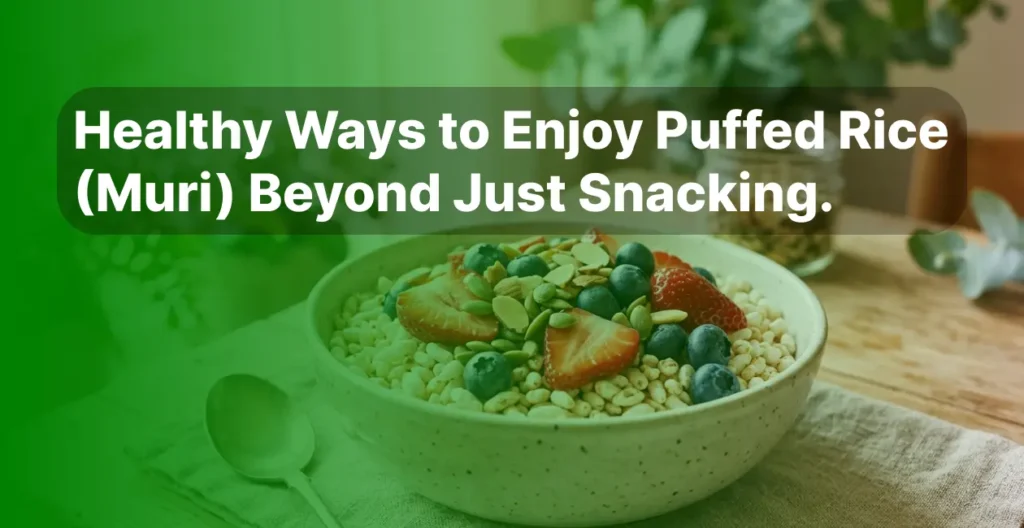
1. The Muri Breakfast Bowl with Yogurt and Fruit
This is one of the easiest nutritious South Asian breakfast ideas for the USA because everything you need is already in a standard American grocery store.
Think of this as the desi version of granola and yogurt, but lighter, quicker, and with more crunch.
How to make it:
- Start with 2 cups of crispy Muri in a bowl
- Add a big spoon of plain Greek yogurt or regular yogurt
- Top with sliced banana, a handful of berries, or diced mango
- Sprinkle some chia seeds or flaxseeds for fiber
- Add a few roasted almonds or walnuts for healthy fat and protein
- Drizzle a small amount of honey if you want a touch of sweetness
The yogurt provides the protein that balances Muri’s high glycemic index. The fruit gives you vitamins and natural sweetness. The nuts slow down digestion and keep you full longer. This bowl is a complete, balanced breakfast that takes under three minutes to put together.
Calories per serving: approximately 280 to 320 kcal (much less than most packaged cereals, and far more satisfying)
2. Doodh Muri, Muri with Milk
This one is one of the oldest benefits of eating Muri for breakfast in Bengali and Bihari households. It sounds simple because it is. And simple is sometimes exactly what you need.
Just pour cold or warm milk over a bowl of Muri, add a banana and maybe a teaspoon of sugar or honey, and eat it immediately before the Muri gets soft.
The milk gives you protein and calcium. The Muri gives you light carbohydrates for energy. The banana gives you potassium and natural sweetness.
In summer, many Bengali families use Aam Doodh Muri, chopped ripe mango, cold milk, and Muri together in a bowl. It is refreshing, filling, and genuinely one of the most beautiful breakfasts you will ever try. No cooking needed at all.
3. Murmura Upma, Savory Puffed Rice Stir-Fry
Most Americans think of “upma” as a semolina porridge. But Murmura Upma, also called Uggani in Andhra Pradesh, is a savory stir-fry made with puffed rice instead.
This one does require a few minutes on the stove, but it is still faster than making eggs.
How to make it:
- Rinse 3 cups of Muri under water, then squeeze out all the water completely
- In a pan, heat 1 teaspoon of oil over medium heat
- Add mustard seeds and let them splutter
- Add curry leaves, 1 finely chopped green chili, and a pinch of turmeric
- Add 1 small chopped onion and cook until translucent
- Add the rinsed Muri and stir-fry for 3 to 5 minutes
- Add salt to taste and a squeeze of fresh lime juice
- Top with roasted peanuts and fresh cilantro
This is a warm, savory, deeply satisfying breakfast or light dinner that is naturally gluten-free, very low in fat, and takes about 15 minutes from start to finish.
4. Puffed Rice Energy Balls with Jaggery and Nuts
Jaggery (unrefined cane sugar) is the traditional sweetener used across South Asia. When you combine it with Muri and a few nuts, you get a homemade energy bar that is better than almost anything sold in a package at the gym.
These are called Murmura Laddu or Kurmura Laddu, and they have been a part of South Asian food culture for hundreds of years. They are exactly what they sound like, little balls of puffed rice held together with melted jaggery.
Why are they healthy?
- Jaggery contains iron, magnesium, and potassium, unlike refined sugar, which contains nothing
- Puffed rice provides quick-release carbohydrates for energy
- Nuts add protein and healthy fat
- No artificial preservatives, colors, or flavors
If you do not want to make them from scratch, you can order Laxmi Kurmura Laddu directly from DesiSlice. These traditional puffed rice jaggery balls are available in a 3-pack for just $9.99 and are a ready-made, wholesome sweet snack. Check them out on the Kurmura Laddu product page.
They are perfect as a mid-morning snack, a post-workout energy bite, or a lunchbox treat for kids.
5. Puffed Rice Salad (Muri Makha)
Most people think of Muri Makha as just a snack, but with the right ingredients, it becomes a genuinely filling and nutritious light meal, more like a salad than a street food.
This is the low-calorie puffed rice meal idea that surprises people the most. It looks light, but when you load it with vegetables, sprouts, and protein-rich peanuts, it fills you up properly.
A healthy Muri Makha salad:
- 3 cups crispy Muri
- 1/2 cup finely chopped cucumber
- 1/2 cup cherry tomatoes, halved
- 1 small red onion, finely chopped
- 1/4 cup sprouted chickpeas or lentils (adds protein and fiber)
- 3 tablespoons roasted peanuts
- 2 tablespoons fresh cilantro
- Juice of 1/2 lemon
- 1/4 teaspoon cumin powder, a pinch of black salt, and chaat masala to taste
- 1 teaspoon mustard oil (optional but authentic)
Toss everything together and eat immediately. The sprouted chickpeas are the secret here, they add plant-based protein that makes this salad actually filling rather than just crunchy.
Approximate calories for this full bowl: 280 to 350 kcal. That is a light, satisfying, completely plant-based meal.
6. Muri as a Crouton Replacement in Soups and Salads
This is one of the smartest ways to use Muri in healthy diets, tricks that most people never think of.
Regular croutons are made from white bread, fried or baked in oil, and contribute anywhere from 50 to 100 extra calories to your soup for very little nutritional benefit. Puffed rice does the same job, adds crunch and texture, for just 15 to 20 calories per spoonful.
Add a small handful of Muri to:
- Tomato soup (right before serving, not while cooking)
- Any lentil or dal soup
- A simple green salad
- A bowl of raita (yogurt with cucumber and spices)
The rule is to add it at the very last moment. Muri absorbs liquid quickly, so you want to eat it while it still has its crunch. Serve, add Muri, eat immediately.
7. Healthy Masala Chivda, Spiced Puffed Rice Trail Mix
Chivda is basically the South Asian version of a trail mix. When made with the right ingredients and a light hand with oil, it becomes one of the best gluten-free puffed rice snack alternatives for people who want something crunchy and satisfying without reaching for chips or crackers.
A healthy Masala Chivda:
- 4 cups of puffed rice, dry roasted for 3 to 4 minutes
- 3 tablespoons roasted peanuts
- 2 tablespoons roasted chana dal (Bengal gram)
- 10 curry leaves, fried for 30 seconds in 1 teaspoon oil
- 1/4 teaspoon turmeric
- 1/4 teaspoon red chili powder
- 1/4 teaspoon cumin powder
- Salt to taste
- A squeeze of fresh lemon juice at the end
Toss everything together while the puffed rice is still warm from roasting. Let it cool completely, then store in an airtight container. This mix stays crispy for up to 10 to 14 days at room temperature.
The peanuts and chana dal add protein and healthy fat that make this more than just a light carb snack. It is genuinely filling, naturally gluten-free, and about 100 times better than any packaged chip you could grab off a shelf.
A Quick Note About the Glycemic Index
We mentioned the high glycemic index of puffed rice earlier, and it is worth saying clearly: this does not make Muri a “bad” food. It just means you need to be thoughtful about how you eat it.
Here is the simple rule: Never eat Muri completely alone. Always add at least one of these:
- A protein (yogurt, peanuts, lentils, chickpeas, milk, egg)
- A healthy fat (roasted nuts, a drizzle of mustard oil or olive oil)
- A fiber source (vegetables, sprouted pulses, chia seeds, flaxseeds)
When you pair Muri with any of these, the glycemic response slows down dramatically. Your blood sugar rises gently instead of spiking. You feel satisfied longer. This is exactly what all seven of the ideas above are designed to do.
People with diabetes should speak to their doctor or dietitian before making puffed rice a regular part of their diet, and should always eat it in small portions with plenty of protein and fiber alongside.
Tips for Buying and Storing Puffed Rice in the USA
Buying tips:
- Always buy plain, unsweetened puffed rice. Sweetened rice puffs (like many breakfast cereals) have very different nutritional profiles.
- Look for puffed rice that is white and dry, with a good snap when you press a grain between your fingers.
- For the most authentic flavor, look for “laal muri” (literally red muri) at South Asian grocery stores. This variety has a slightly deeper flavor that works beautifully in savory recipes.
- You can find quality puffed rice and puffed rice products in the DesiSlice Snacks section.
Storage tips:
- Keep puffed rice in an airtight container at room temperature.
- Keep it away from any source of moisture, even a brief exposure to humid air will make it go soft and stale.
- If your puffed rice has lost its crunch, dry roast it in a pan on low heat for 3 to 5 minutes, or microwave it for 60 to 90 seconds. It will come back to life.
- Properly stored, puffed rice stays fresh for up to 3 to 4 months.
South Asian Breakfast Ideas Beyond Muri
If you love eating South Asian foods for breakfast and want to explore more options, the DesiSlice blog is a great place to start. Our recent posts cover everything from the full guide to making street-style Jhal Muri at home to the health benefits of traditional South Asian leafy greens like lal shak and other Bengali vegetables.
Eating well does not mean giving up the flavors you grew up with. It means knowing how to use those flavors in smarter, more balanced ways. Muri is one of the best examples of a traditional ingredient that is already healthy, it just needs the right company on the plate.
Final Thoughts: Muri Is a Daily Ingredient, Not Just a Street Snack
Puffed rice is one of the most underestimated ingredients in the South Asian pantry. People who grew up eating it know it as the thing you grab on the way somewhere, quick, cheap, and filling. But when you stop and look at what it actually offers nutritionally, and how many different ways it can be used in a healthy kitchen, it becomes something far more exciting.
At under 60 calories per cup, naturally gluten-free, incredibly easy to digest, and endlessly flexible in the kitchen, Muri deserves a permanent spot in your American pantry, not just as an occasional snack, but as a daily building block for light, satisfying, genuinely nourishing meals.
Whether you are making a quick breakfast bowl before work, a savory stir-fry for dinner, a crunchy salad topper, or reaching for a traditional Kurmura Laddu as a post-gym energy bite, Muri has your back.
Explore all puffed rice products and South Asian pantry staples at DesiSlice and have them delivered right to your door across the USA.
Frequently Asked Questions
Is puffed rice good for weight loss?
Yes, when eaten in moderation and paired with protein or fiber, puffed rice is a very helpful ingredient for weight management. It is extremely low in fat and calories, and its high volume means a big bowl fills your stomach without costing many calories. The key is pairing it well and avoiding overeating.
Can I eat Muri every day?
Yes, in reasonable amounts. Two to three cups per day, paired with good protein and fiber sources, is a sensible amount for most adults. Eating very large amounts every day without balancing it with other nutrient-dense foods is not a good idea.
Is puffed rice safe for people with gluten intolerance?
Plain puffed rice made from white or brown rice is naturally gluten-free. Always check the packaging to confirm there is no cross-contamination if you have celiac disease.
What is the difference between puffed rice and rice cakes?
Both are made from rice, but rice cakes are formed into compressed discs under heat and pressure. Puffed rice remains as loose, airy individual grains. Rice cakes are firmer and denser; puffed rice is much lighter.
Can I give Muri to my kids?
Absolutely. Muri is one of the most child-friendly foods in South Asian cuisine. Just be mindful of any choking risk for very young children, and avoid adding too many spices for young kids.
Where can I buy puffed rice products in the USA online?
DesiSlice ships across the USA and carries South Asian pantry essentials including puffed rice-based products. Browse the DesiSlice Shop for puffed rice snacks, traditional puffed rice jaggery balls, and more South Asian pantry staples, with free shipping on orders over $49.





Comments ( 0 )