

For decades, green spinach (Spinacia oleracea) dominated the superfood conversation. It earned its fame for being rich in iron and vitamins. This status was largely unchallenged.
But a powerful rival exists. It is bright crimson. It is tougher. It is ancient.
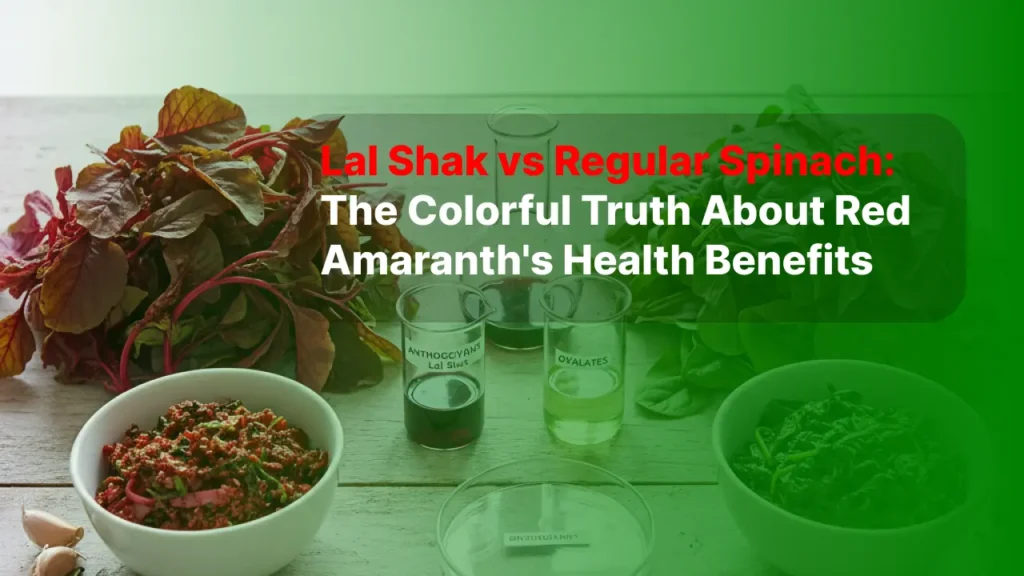
This contender is Lal Shak, or Red Amaranth (Amaranthus tricolor). Known widely as Bengali spinach, this ancient leaf is quietly winning the nutritional fight. It offers specific health advantages that conventional green spinach simply cannot match. It represents a paradigm shift in leafy green consumption.
Stop treating Red Amaranth as merely a colorful substitute. It is a genuine, bioavailable nutritional powerhouse.
Here is the comprehensive, colorful truth about Lal Shak’s superior health profile.
I. Botanical Identity: The Family Feud
The first point of clarity must be botanical. Many people group the two plants together. This is a mistake. They are from entirely different families.
Green Spinach (Spinacia oleracea) belongs to the Chenopodiaceae family. It is related to beets and quinoa.
Lal Shak (Red Amaranth) belongs to the Amaranthaceae family. Its genus, Amaranthus, is a versatile group. It contains species prized for both their leaves (Lal Shak) and their seeds (Amaranth grain, often called Rajgira).
This difference in botanical origin is not academic. It dictates everything: the chemical makeup, the nutrient distribution, and the presence of potent phytochemicals. Amaranth is highly adaptive. It thrives in hot, stressful environments where spinach wilts. This resilience translates directly into a more robust nutritional profile in the leaf.
II. The Colorful Truth: Anthocyanins and Bioactivity
The most striking difference is the crimson color. This isn’t just cosmetic branding.
The vibrant red pigment in Lal Shak comes from anthocyanins. These compounds are powerful, water-soluble antioxidants. They are the same pigments responsible for the deep hues in acai berries and purple
carrots.
Anthocyanins neutralize harmful free radicals in the body. They protect your cells from oxidative stress. This damage reduction is the cornerstone of anti-aging and disease prevention.
Green spinach contains beneficial antioxidants. These include Lutein and Zeaxanthin. These are primarily carotenoids. They are fat-soluble. They are excellent for eye health. However, green spinach lacks the high concentration of anthocyanins that gives Red Amaranth its systemic advantage.
A. The Anthocyanin Advantage
Research suggests a strong link between anthocyanin intake and major health markers.
- Cardiovascular Support: Anthocyanins help regulate blood pressure. They improve endothelial function. They support healthy blood flow, reducing the risk of arterial stiffness.
- Cognitive Function: These compounds cross the blood-brain barrier. They may help protect against age-related cognitive decline.
- Anti-Inflammation: The anti-inflammatory effects of these pigments are potent. They work by modulating the body’s inflammatory signaling pathways.
Lal Shak delivers this potent class of phytonutrients in every leaf. This is a unique advantage over its green counterpart.
III. The Mineral Bioavailability Scorecard
A food’s nutrient content is only half the story. The other half is bioavailability. This refers to how well the human body can actually absorb and utilize the nutrients.
This is where the infamous oxalate content becomes critical.
A. The Oxalate Dilemma
Spinach contains high levels of oxalates (oxalic acid). Oxalates are natural compounds that bind to key minerals, notably calcium and iron, in the gut. They act as anti-nutrients. This binding creates insoluble complexes. These complexes inhibit efficient mineral absorption.
For individuals prone to kidney stones, high-oxalate foods must be restricted.
B. Lal Shak’s Lower Oxalate Solution
Red Amaranth, thankfully, offers a practical solution. The leaves of Amaranthus tricolor contain significantly lower oxalate levels than green spinach. Some specific varieties of Amaranth are reported to contain negligible amounts.
The Benefit: The iron and calcium found in Lal Shak are much more readily available. This translates directly to better absorption. You get more of the mineral content you consume. This superior mineral bioavailability makes Lal Shak the clear winner for supporting bone density and combating iron deficiency (anemia).
IV. The Micronutrient Face-Off: Raw Data Analysis
When we analyze the raw nutrient profile, Lal Shak exhibits exceptional density in several vital categories.
| Nutrient (Per 100g, Raw/Cooked) | Red Amaranth Leaves (Lal Shak) | Green Spinach | Key Difference |
| Vitamin C | Up to 43.3 mg | ~9.8 mg | 4 Times Higher in Lal Shak (Immune, Collagen) |
| Calcium | Often 2-3X higher (e.g., up to 215mg) | Typically 99 mg | Higher in Lal Shak (Better absorption due to low oxalate) |
| Vitamin A (Beta-Carotene) | Significantly Higher | High | Higher in Lal Shak (Vision, Skin Health) |
| Protein (g) | ~2.5 g | ~2.9 g | Comparable (Amaranth has a better amino acid profile) |
| Iron (mg) | Often Higher | High | Comparable to Higher in Lal Shak (Superior absorption) |
| Potassium | Very High | Very High | Comparable (Supports blood pressure) |
A. The Vitamin C Supercharge
Lal Shak’s high Vitamin C content is a game-changer. Vitamin C is a powerful, water-soluble antioxidant. It is crucial for:
- Immune Defense: It enhances white blood cell function.
- Iron Chelation: It is essential for converting plant-based (non-heme) iron into a form the body can absorb. The synergistic combination of high iron and high Vitamin C makes Lal Shak a powerful food for combating anemia.
B. Bone Health: Calcium and Vitamin K
Spinach is renowned for its high Vitamin K content. Vitamin K is vital for bone mineralization and blood clotting. However, Amaranth leaves are also an exceptional source of Vitamin K.
The combination of its high Calcium and low oxalate content positions Red Amaranth as a leading green for promoting long-term bone health. Calcium is the primary structural component of bone. Vitamin K helps shepherd that calcium into the bone matrix. This duo makes Lal Shak a formidable preventative food against osteoporosis.
V. The Functional Food Focus: Beyond Vitamins
Red Amaranth offers functional benefits that extend far beyond standard vitamin and mineral content.
A. Complete Plant Protein: The Lysine Factor
Most plant proteins are “incomplete.” They lack one or more of the nine essential amino acids. The Amaranth plant, particularly the leaf, defies this norm.
Amaranth protein contains all nine essential amino acids. Crucially, it contains a significant amount of lysine. Lysine is an amino acid often deficient in cereal grains and common leafy vegetables.
Why Lysine Matters: It is necessary for protein synthesis, hormone production, and the absorption of calcium. It is also vital for the formation of collagen, which supports healthy skin, hair, and connective tissue. This makes Lal Shak a superior plant-based protein source.
B. Natural Nitrates and Circulatory Health
Modern research highlights Red Amaranth as a fantastic source of natural nitrates.
When consumed, the bacteria in your mouth convert these nitrates to nitrites. This is further converted into nitric oxide (NO). Nitric oxide is a potent vasodilator. It signals the smooth muscle cells in your arteries to relax.
The Benefit: This relaxation improves circulation. It helps regulate blood pressure. For athletes, increased nitric oxide levels can enhance oxygen delivery to muscles, improving endurance and recovery.
C. Digestive Health: Fiber and Satiety
Both leafy greens are excellent sources of dietary fiber. Lal Shak contains a mix of soluble and insoluble fiber.
- Insoluble Fiber (The bulk) promotes regular bowel movements. It prevents constipation.
- Soluble Fiber (The gel) helps lower LDL (“bad”) cholesterol. It stabilizes blood sugar levels by slowing the absorption of glucose.
The combination of high fiber and high protein in Red Amaranth significantly increases satiety. This makes it an ideal food for effective weight management and appetite control.
VI. Culinary Versatility and Global Use
While the nutrition is key, practicality matters. Both vegetables are versatile, but they behave differently during cooking.
A. Cooking and Nutrient Retention
Green spinach is delicate. It cooks down rapidly and can lose a significant portion of its water-soluble vitamins (like Vitamin C and some B vitamins) if boiled.
Lal Shak leaves are generally thicker and tougher than spinach. They require a slightly longer cooking time (often 2–3 minutes more). This toughness means they hold their structure better in curries and stir-fries.
Tip for Lal Shak: To maximize nutrient retention, light steaming or quick stir-frying is recommended. Pair it with a source of healthy fat, like ghee or a cooking oil, to boost the absorption of its fat-soluble Vitamin A and K.
B. Cultural Significance
Lal Shak, or Bengali spinach, holds a profound place in South Asian cuisine. It is not a trendy new item. It is a time-tested staple. It is a symbol of resilience and accessible nutrition, grown widely across India and Bangladesh. Its integration into traditional dishes like shak bhaja (simple fried greens) or shorshe shak (greens in a mustard paste) showcases its deep cultural relevance as a source of powerful, affordable medicine.
VII. The Final Verdict: Choosing Red Amaranth
The debate is settled by the chemistry. Lal Shak is not a substitute for spinach. It is an evolutionary upgrade.
It provides concentrated anthocyanin antioxidants. It delivers superior mineral bioavailability due to minimal oxalates. It boasts higher doses of immunity-boosting Vitamin C. It includes the complete protein advantage of lysine.
Integrate Red Amaranth (Amaranthus tricolor) into your weekly diet. Seek it out at your local market. Use it in stir-fries, curries, and steamed side dishes.
Don’t settle for the standard green. Choose the powerful, colorful truth. Choose Lal Shak.




Comments ( 0 )