

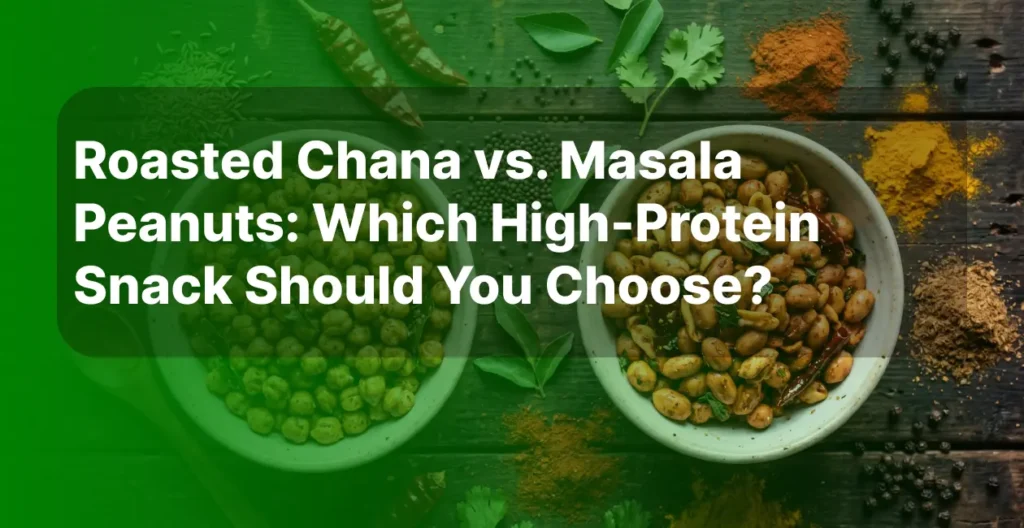
You’re standing in front of a snack shelf or scrolling through an online grocery store, and there they are: roasted chana on one side, masala peanuts on the other. Both are crunchy. Both are filling. Both get marketed as “healthy” protein snacks. But which one actually delivers?
Most comparison articles either give you a vague “both are good” answer or drown you in generic nutrition tables without context. This one does neither. By the time you finish reading, you’ll know exactly which snack fits your body, your goals, and your daily routine, whether you’re managing weight, building muscle, snacking between meetings, or just trying to eat smarter without giving up flavor.
What Exactly Are These Snacks?
Roasted Chana refers to dry-roasted split chickpeas (also called Bengal gram or dalia in Hindi). The chickpeas are heat-processed without oil, giving them a hard, crunchy texture. Plain roasted chana has almost no added fat, the roasting is done dry.
Masala Peanuts are raw groundnuts coated in a spiced chickpea flour batter (besan) and deep-fried or baked. The coating varies by brand: some add rice flour, some add cornstarch. The spice mix typically includes chili, cumin, black salt, and amchur (dry mango powder).
These two snacks share the South Asian pantry but come from very different nutritional families. One is a legume. The other is a legume-coated oilseed. That distinction matters more than most people realize.
Head-to-Head Nutrition Breakdown
Here’s the data for a standard 30g serving (roughly a small handful), based on USDA and verified brand nutrition labels:
| Nutrient | Roasted Chana (30g) | Masala Peanuts (30g) |
|---|---|---|
| Calories | ~115 kcal | ~155 kcal |
| Protein | ~7g | ~6.5g |
| Total Fat | ~1.5g | ~9g |
| Saturated Fat | ~0.2g | ~1.5g |
| Carbohydrates | ~18g | ~12g |
| Dietary Fiber | ~4g | ~2g |
| Sodium | ~5mg (plain) | ~180-250mg |
| Iron | ~10% DV | ~4% DV |
| Magnesium | ~8% DV | ~12% DV |
Key takeaway: Roasted chana has a slight protein edge per gram, significantly less fat, more fiber, and far less sodium. Masala peanuts carry more total fat, mostly unsaturated, and fewer carbohydrates.
Neither snack is unhealthy. They just serve different nutritional purposes.
Protein Quality: Not All Grams Are Created Equal
The number of protein grams on a label only tells half the story. Protein quality depends on its amino acid profile and how well your body absorbs it.
Roasted Chana (Chickpeas):
- A good source of lysine (an amino acid often low in grains)
- Moderate levels of methionine and cysteine
- Plant-based protein with a PDCAAS (Protein Digestibility Corrected Amino Acid Score) of around 0.78
Peanuts:
- Contain all 20 amino acids, including arginine which supports cardiovascular health
- PDCAAS is approximately 0.52, lower than chickpeas
- However, peanuts are also rich in healthy fats that support fat-soluble vitamin absorption
The verdict on protein quality: Roasted chana wins on protein efficiency. But combining either snack with a complementary protein source, like a handful of pumpkin seeds or a glass of milk, improves the overall amino acid profile significantly.
PRO TIP: If you’re eating these snacks for muscle recovery post-workout, pair roasted chana with a small portion of yogurt. The dairy fills the methionine gap that legumes typically have, making it a more complete recovery snack.
Which One Wins for Weight Loss?
Calorie count is one factor. Satiety is another, and arguably more important.
Roasted chana scores exceptionally high on the satiety index for two reasons:
- The fiber content (4g per 30g serving) slows digestion and keeps you full longer
- Its hard texture means you chew more, which signals fullness to the brain earlier
Masala peanuts are calorie-denser. The fat content, while healthy, packs more energy per gram. They’re also easier to overeat because the crispy coating makes them highly palatable and moreish.
That said, fat is not the enemy of weight loss. Studies published in journals like Obesity Reviews consistently show that nuts, including peanuts, do not contribute to weight gain when eaten in controlled portions, and they may even aid long-term weight management by reducing hunger between meals.
For weight loss, roasted chana is the safer daily snack. It gives you more volume, more fiber, and fewer calories per serving. Masala peanuts are fine in smaller portions (15-20g) but require more portion discipline.
PRO TIP: Pre-portion your masala peanuts into small containers or snack bags the day before. Eating directly from a large bag is a reliable way to consume 2-3x more than intended.
Digestive Health and Gut Impact
This is where roasted chana has a clear and often underappreciated advantage.
The fiber in roasted chickpeas, primarily resistant starch and soluble fiber, acts as a prebiotic. It feeds beneficial gut bacteria like Bifidobacterium and Lactobacillus, which are linked to better digestion, reduced bloating over time, and improved immune function.
Some people experience temporary gas when first introducing chickpeas due to oligosaccharides (a type of fermentable carbohydrate). This typically resolves within 1-2 weeks as gut bacteria adapt.
Masala peanuts, due to the besan coating and frying process, can be heavier on the stomach for people with sensitive digestion. The spice mix may also trigger discomfort if you’re prone to acid reflux.
Who should be cautious:
- People with IBS should introduce roasted chana gradually
- Anyone with a peanut allergy must completely avoid masala peanuts (obvious, but worth stating clearly)
- Those with gallbladder issues should consult their doctor about high-fat snacks like masala peanuts
Who Should Eat What? Matching Snacks to Goals
| Your Goal | Recommended Snack | Reason |
|---|---|---|
| Weight loss / calorie control | Roasted Chana | Lower calories, higher fiber, more filling |
| Muscle gain / bulking | Masala Peanuts | Higher calorie density, healthy fats |
| Heart health | Roasted Chana | Low fat, high iron, no trans fats |
| Pre-workout energy | Masala Peanuts | More calories and fast energy from fats + carbs |
| Vegan protein daily staple | Roasted Chana | Consistent protein with excellent fiber ratio |
| Midday hunger control | Roasted Chana | High satiety index |
| Flavor-forward snacking | Masala Peanuts | Spiced coating delivers a more complex taste |
The Fat Question: Are Peanuts Too Fatty?
Short answer: no, not if you’re eating a sensible amount.
The fat in peanuts is approximately 80% unsaturated, a mix of monounsaturated (oleic acid, the same fat in olive oil) and polyunsaturated fats. These fats actively support heart health, reduce LDL cholesterol, and help your body absorb fat-soluble vitamins like A, D, E, and K.
The problem isn’t the fat in peanuts. It’s the combined fat from the frying process when masala peanuts are made using oil. Baked or air-fried masala peanut brands significantly reduce this concern.
When shopping, look for:
- “Baked” or “air-roasted” on the label
- Less than 150mg of sodium per 30g serving
- No partially hydrogenated oils (trans fats) in the ingredients list
Buying Roasted Chana and Masala Peanuts Online in the USA
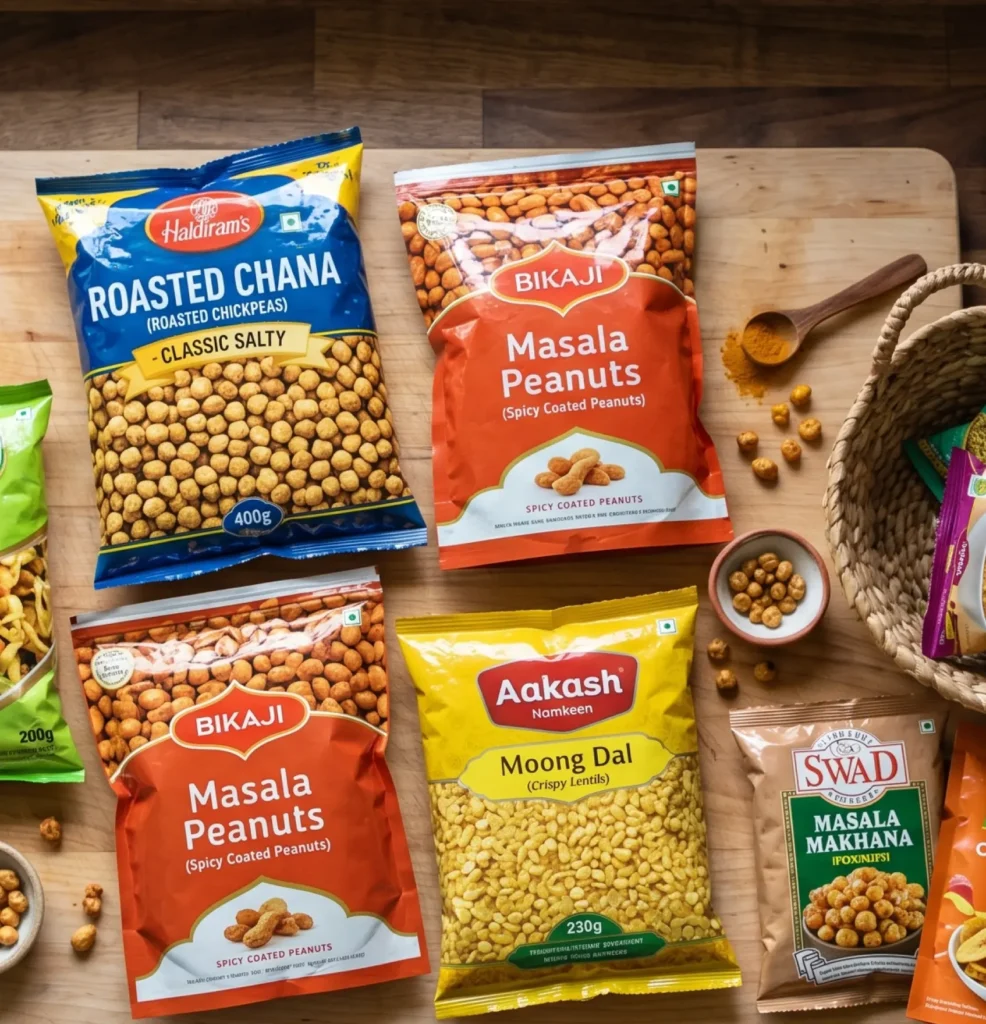
Access to quality South Asian snacks in the US has improved dramatically. Here’s what to look for across major platforms:
Where to buy:
- Amazon:- Wide variety of Indian grocery brands; look for verified reviews and ingredient transparency
- Walmart Grocery:- Carries brands like Deep Foods and Swad under the international foods section
- Patel Brothers (online store):- One of the most trusted South Asian grocery sources in the US
- Thrive Market:- Good for organic roasted chickpeas; fewer masala peanut options
- iShopIndian / MyDeshi:- Niche online grocers with strong South Asian snack selections
What to check on the label before buying:
- Ingredient list: oil type used (prefer sunflower, canola, or none)
- Sodium content: below 200mg per serving is acceptable
- Added sugars: should be zero or near-zero for savory versions
- Serving size: many brands use a 28g serving to make calories look lower
PRO TIP: When buying roasted chana in bulk online, check the roast date or manufacturing date. Chana loses its crunch after 3-4 months, especially in humid climates or if the packaging seal is weak.
Pro Tips From Nutrition Practitioners
These are practical observations from dietitians and sports nutritionists, not generic advice you’ve already seen:
1. The “Chana + Lemon + Chili” upgrade Plain roasted chana is nutritionally superior but can feel boring. A squeeze of lemon juice and a pinch of chili powder adds zero meaningful calories while dramatically increasing palatability. This also adds vitamin C, which enhances iron absorption from the chickpeas.
2. Use masala peanuts as a topping, not a snack Instead of eating masala peanuts solo, crush a small amount (10-15g) over raita, salads, or poha. You get the flavor hit with far better portion control.
3. Watch the sodium stack If you’re eating masala peanuts alongside other processed foods during the day, your sodium intake can spike quickly. Roasted chana (especially plain or lightly salted) is a smarter choice for people managing blood pressure.
4. Pair either snack with water Both snacks are dry and high in fiber or fat. Drinking water alongside them helps digestion and slows your eating pace, naturally limiting how much you consume.
Which Should You Choose?
If your priority is daily snacking with weight control or heart health in mind, roasted chana is the smarter pick. It fills you up, costs less per gram of protein, and has a nutritional profile that holds up across almost every health metric.
If you need something more calorie-dense for active days, travel, or heavy workouts, masala peanuts cover that gap well, just be mindful of portions and sodium.
Honestly? The best approach for most people is to keep both on hand and rotate them based on the day. Treat roasted chana as your default, and masala peanuts as your treat that still has real nutritional value.
FAQ
Is roasted chana good for diabetes?
Yes. Roasted chana has a low glycemic index (GI of around 28-33), meaning it causes a slow, steady rise in blood sugar rather than a spike. It’s widely recommended by dietitians for people managing type 2 diabetes. Masala peanuts also have a low GI, but the sodium and spice coating make chana the safer daily choice.
Can I eat masala peanuts every day?
You can, but keep portions small, around 20-25g per day. Daily consumption of high-sodium, fried snacks adds up over weeks and months. If you prefer eating peanuts daily, opt for plain roasted peanuts or baked masala versions.
Which has more protein per 100g?
Roasted chana has approximately 22-25g of protein per 100g. Masala peanuts (including the coating) have approximately 18-22g per 100g. Plain roasted peanuts without coating can reach 25-26g per 100g, but masala coating reduces the density.
Are these snacks safe for children?
Roasted chana, in its softer split form (dalia), is safe for children above 3 years. Avoid giving whole roasted chana to very young children due to choking risk. Masala peanuts should be avoided for children under 5 due to both peanut allergy risk and spice intensity.
Which is better for vegans looking for daily protein?
Roasted chana is the better everyday option for vegans. It provides consistent protein with excellent fiber and iron, nutrients that many plant-based diets can fall short on. Masala peanuts are a good supplement but shouldn’t replace higher-volume protein sources.
Do roasted chickpeas have the same nutrition as canned chickpeas?
Not exactly. Roasting removes moisture and concentrates nutrients per gram. Roasted chana is significantly higher in protein, fiber, and calories per 100g compared to boiled or canned chickpeas. It also has a much lower water content, which is why it’s shelf-stable and crunchier.
Are masala peanuts gluten-free?
Most traditional masala peanuts are not gluten-free because they use besan (chickpea flour) as the coating binder, which is naturally gluten-free, but many commercial brands use wheat flour or shared equipment. Always check the label for a certified gluten-free mark if you have celiac disease or gluten sensitivity.



Comments ( 0 )